Choosing the best kind of chicken feed depends on the age and purpose of the chickens. A balanced feed with the right mix of protein, vitamins, and minerals is key to keeping chickens healthy and productive.
Different types of feed serve different roles, from starters for chicks to laying feeds for hens. Understanding these categories helps in making the right choice that matches the chicken’s needs.
Quality ingredients and proper feeding routines also play a big role in poultry health. Avoiding common feeding mistakes ensures chickens get the nutrition they need without waste.
Key Takeaways
- Proper nutrition varies by chicken age and purpose.
- Balanced feed includes essential proteins and vitamins.
- Good feeding habits support poultry health and productivity.
Understanding the Nutritional Needs of Chickens

Chickens require specific nutrients to stay healthy, grow well, and produce eggs. The right mix of proteins, fats, carbohydrates, vitamins, and minerals must be included in their diet. These nutrients work together to provide energy, support body functions, and maintain overall health.
Macronutrients Essential for Chicken Health
Protein is critical for chickens because it helps build muscles and feathers. The body uses amino acids from protein to repair tissues and support growth. Most chicken feeds contain about 16-20% protein, but young chicks need higher protein level feeds, around 22-24%.
Fats provide energy and help absorb fat-soluble vitamins. Carbohydrates are the main energy source for chickens. Corn and wheat are common grains used to supply carbohydrates. A good chicken feed balances these macronutrients to keep energy levels steady throughout the day.
Role of Vitamins and Minerals
Vitamins and minerals support many body functions in chickens. Vitamins like A, D, and E aid in vision, bone strength, and immune health. Minerals such as calcium and phosphorus are essential for strong eggshells and bone development.
Deficiencies in any vitamin or mineral can lead to poor growth, weak eggs, or illness. For example, a lack of calcium causes thin eggshells, while low vitamin D can weaken bones. Balanced feeds often add these nutrients in the right amounts to avoid problems.
The Importance of a Balanced Diet
A balanced diet ensures chickens get enough protein, energy, vitamins, and minerals. It prevents health problems and supports steady egg production. Feeds designed for specific chicken types, like layers or broilers, meet their unique nutritional needs.
Chickens also benefit from a variety of grains, seeds, and greens. This variety helps maintain their health and provides different nutrients not always found in commercial feed. Feeding good quality, balanced food contributes directly to the poultry’s growth and productivity.
Types of Chicken Feed and Their Benefits
Chicken feed comes in various forms, each designed to meet the birds’ nutritional needs in different ways. Understanding the differences helps in choosing the right feed for specific types of chickens and farming goals.
Pellets versus Mash
Pellets are compressed chicken feed formed into small, hard cylinders. They provide a balanced diet in every pellet, ensuring even intake of nutrients. Pellets reduce feed waste since chickens eat them easily without sorting through ingredients. They are ideal for all types of chickens and simplify feeding.
Mash is a loose, powdery feed mix. It allows chickens to pick and choose, which may lead to uneven nutrient intake. Mash is cheaper to produce and can be mixed with additives or medications. However, it may create more dust and cause more feed waste compared to pellets.
Crumbles and Their Uses
Crumbles are smaller pieces of pellets broken into coarse bits. They combine the benefits of pellets and mash by being easier to eat than pellets but with less sorting than mash. Crumbles are especially good for young chickens or chicks because they are easier to chew and digest.
This form of feed supports steady growth and consistent nutrient intake. Crumbles also reduce feed loss and clutter around the feeder. They work well for commercial poultry farms and backyard flocks alike.
Whole Grains and Scratch Feed
Whole grains are unprocessed seeds like corn, wheat, or oats. Scratch feed is a mix of whole grains meant for chickens to peck at. It encourages natural foraging behavior and provides entertainment but is not a complete feed.
Scratch feed should be used as a supplement, not the main diet. It lacks some vitamins and minerals found in complete feeds and can lead to nutritional gaps if overfed. Whole grains and scratch feed are best for adding variety and energy, especially in free-range settings.
Feeding Chickens at Different Life Stages
Different types of chicken feed are important for each phase of a chicken’s life. Nutrition needs change as chickens grow, so feed must supply the right amount of protein, vitamins, and minerals to support health and development.
Starter Feed for Chicks
Starter feed is designed for chicks from hatch to about 6 weeks old. It has high protein levels, usually around 18-20%, to help young chicks grow strong muscles and bones quickly.
This feed is finely ground so chicks can easily eat it. It should include essential vitamins like A, D, and E, plus minerals such as calcium and phosphorus for proper bone growth.
Chicks eat small amounts often, so the feed must be fresh and clean. Water should be available at all times to keep them hydrated while they digest the starter feed well.
Grower Feed for Juvenile Birds
Grower feed is used after the starter phase, from about 6 weeks to 16 weeks. It has slightly less protein, about 14-16%, helping chickens develop steadily without gaining excess fat.
This feed supports the transition from rapid chick growth to preparing their bodies for adulthood. It has balanced vitamins and minerals but less calcium than starter or layer feed.
Providing grower feed helps chickens build strong frames and healthy organs. At this stage, they eat more, so feeders should be kept clean to prevent disease.
Layer Feed for Egg Production
Layer feed is meant for hens beginning egg production, usually after 16 weeks of age. It contains about 16-18% protein and higher calcium levels needed for strong eggshells.
Calcium is the most important addition in layer feed to prevent weak shells and maintain hen health. Often, oyster shell or limestone is added separately to support this.
This feed also includes vitamins D3 and A, which promote good digestion and immune function during laying cycles. Proper layer feed ensures consistent egg production and healthy hens during raising poultry for eggs.
Key Ingredients to Look for in High-Quality Chicken Feed
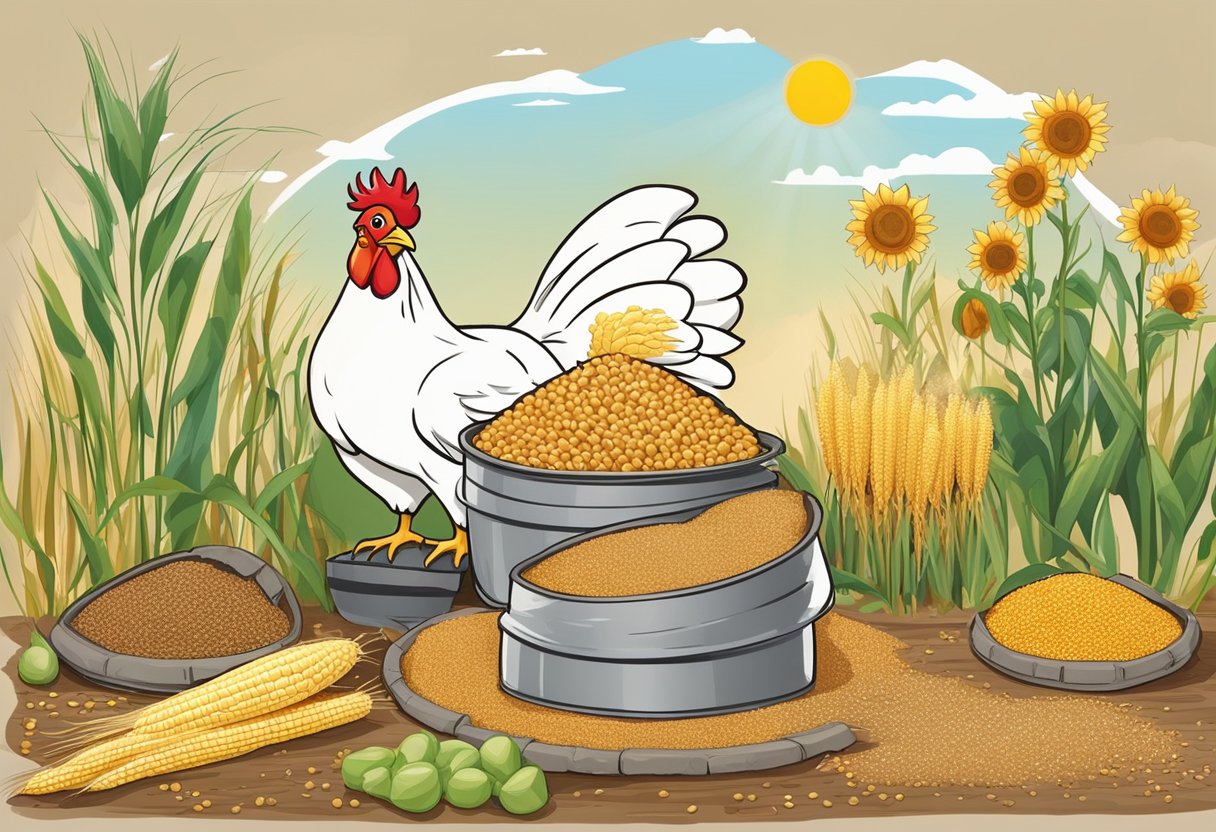
Good chicken feed contains specific grains and nutrients that support growth, egg production, and overall health. The right mix of whole grains and fats helps chickens get energy and essential nutrients.
Whole Wheat, Barley, and Oats
Whole wheat is a great source of carbohydrates and fiber, which helps chickens digest food well. It provides slow-releasing energy, keeping chickens active throughout the day. Barley adds protein and important vitamins like B-complex, which supports energy metabolism.
Whole oats and rolled oats are rich in fiber and can improve digestion. They also contain oils that supply extra energy. Feeding whole or rolled oats in moderate amounts can help chickens maintain a healthy weight and strong immune systems.
Essential Fats and Fatty Acids
Fats are important for healthy feathers, skin, and egg quality. Fatty acids, especially omega-3 and omega-6, play a key role in chicken health. These fats improve brain function and reduce inflammation.
Feed that contains natural sources of fatty acids, like flaxseed oil or fish oil, is beneficial. Balanced fat content ensures chickens get enough energy without causing obesity. Fat improves feed efficiency, meaning chickens get more from what they eat.
Cracked Corn and Grain
Cracked corn is a common energy source in chicken feed. It is easy to digest and provides carbohydrates needed for daily activity. Cracked grain, like cracked barley or oats, helps chickens chew better and digest grains more efficiently.
Using cracked grains instead of whole kernels reduces waste and improves nutrient absorption. These grains are often mixed with other ingredients to provide a balanced diet. Cracked corn is especially good for laying hens needing extra calories.
Supplemental Nutrition and Additives
Chickens need more than just basic grain feed to stay healthy and productive. Certain minerals, vitamins, and physical aids play important roles in growth, egg production, and digestion. Providing these extra nutrients helps keep chickens strong and laying eggs with good shells.
Calcium and Eggshell Quality
Calcium is essential for hens to produce strong eggshells. If they don’t get enough, eggs can have thin or soft shells that break easily. Layer feeds often contain added calcium, but it might not be enough when hens are laying a lot.
Oyster shell is a common calcium supplement given separately. Chickens can eat small amounts as needed to meet their calcium requirements. The supplement also contains tiny amounts of phosphorus, which helps calcium absorption.
Too much calcium can cause health problems, so it’s important to balance it carefully. Sodium and potassium levels in the feed also affect calcium use in the body and overall bird health.
Vitamins and Trace Minerals
Vitamins like A, D, and E are necessary for chicken growth, immune function, and egg production. Trace minerals such as zinc, copper, selenium, and iodine support metabolism and disease resistance.
Good quality commercial feeds usually contain these added vitamins and minerals. However, they may need extra supplementation if the chickens are stressed or in poor condition.
Selenium is important in small amounts but toxic in excess. Zinc and copper help with feather health and wound healing. Iodine is needed for thyroid function and overall metabolism.
Offering Grit and Oyster Shell
Grit consists of small stones or coarse sand that chickens eat to help grind food in their gizzards. Without grit, chickens may have trouble digesting whole grains or seeds.
Grit should always be available to free-range and grain-fed chickens. Oyster shell, on the other hand, should be offered only to laying hens as a calcium source. Both support better digestion and egg quality when provided correctly.
Feeding Practices for Optimal Poultry Health
Good feeding practices help keep chickens healthy and productive. Proper water access, feeding times, and allowing chickens to forage play important roles in their well-being.
Water and Moisture in the Diet
Water is essential for chickens and must be clean and fresh at all times. They need about twice as much water as feed by weight. Proper hydration helps with digestion and prevents heat stress.
Adding moisture to feed, like mixing dry feed with a little water, can improve intake, especially during hot or cold weather. However, wet feed should be given in small amounts to avoid spoilage and bacteria growth.
Chickens also get some moisture from greens and insects if allowed to free range. Providing water inside the chicken coop ensures they have constant access.
Feeding Frequency and Amounts
Chickens should be fed twice a day, in the morning and late afternoon. This keeps their energy steady and helps prevent overeating or waste.
Amounts depend on the chicken’s age and purpose. Laying hens usually eat 100 to 120 grams per day. Chicks need less but more frequent feeding.
Using feeders inside the coop reduces feed contamination and waste. It’s important to monitor feed levels daily and adjust as needed.
Free Ranging and Foraging
Free ranging lets chickens find insects, seeds, and plants, which add nutrients and variety to their diet. This natural foraging reduces feed costs and improves chicken health.
Chickens should have access to safe, clean areas outside the chicken coop where they can scratch and peck. However, farmers should watch for predators.
Free ranging complements feed but does not replace it. Balanced feed is still necessary to meet all nutrient needs.
Special Considerations for Homemade and Organic Chicken Feed
Feeding chickens with homemade or organic feed needs careful planning. He or she should weigh the benefits and challenges of making mixes, find clear options for organic ingredients, and understand how sprouting grains can improve nutrition.
Pros and Cons of Homemade Mixes
Homemade chicken feed allows control over ingredients. It can include grains, seeds, and kitchen scraps. This option helps avoid unwanted additives and can be cheaper.
However, mixing the right balance of nutrients is hard. Chickens need protein, vitamins, and minerals in exact amounts. Without proper knowledge, the birds might lack essential nutrients.
The risk of mold or spoilage is higher when making homemade mixes. Ingredients must be fresh and stored correctly. Overall, homemade feed suits someone who is willing to learn and monitor their flock closely.
Organic and Non-GMO Feed Options
Organic chicken feed must follow strict rules. It avoids synthetic pesticides, fertilizers, and genetically modified ingredients. This feed is safer for chickens and reduces exposure to chemicals.
Many brands label their products as USDA Organic or Non-GMO Project Verified. Buyers should check for these certifications to ensure quality.
Organic feed is often more expensive than conventional types. But it supports sustainable farming practices. Chickens fed organic feed may also produce healthier eggs and meat.
Sprouting Grains for Chickens
Sprouting grains increases digestion and nutrient value. When grains like wheat, barley, or millet are soaked and sprouted, their nutrient content improves.
Sprouted grains provide more vitamins and enzymes, which help chickens absorb food better. They also add moisture to the diet, which is good during dry weather.
To sprout grains, soak seeds in water for 12-24 hours, then rinse and drain them daily until tiny sprouts appear. Sprouting requires cleanliness to avoid mold growth.
Sprouted grains make a fresh and healthy supplement but should not replace main feed entirely.
Common Feeding Mistakes and How to Avoid Them
Feeding chickens requires careful attention to quantity and quality. Mistakes in feeding can cause poor health, slow growth, and disease. Proper management of feed helps keep chickens active and productive.
Overfeeding and Underfeeding Risks
Overfeeding chickens leads to obesity and wasted food. When chickens get too many calories, they become less active and gain unhealthy weight. This can hurt egg production and increase the risk of fatty liver disease.
Underfeeding causes weak birds and stunts growth. Chickens without enough food won’t lay many eggs and are more likely to catch illnesses. They may also peck at each other out of hunger.
A good practice is to offer feed based on the chickens’ age, size, and breed. Measuring feed daily and adjusting for activity level and weather avoids over or underfeeding. Clean water always must be available.
Balancing Healthy Treats
Treats should be given in moderation. Too many treats can upset the balance of nutrients in the main feed. Healthy treats include vegetables and grains, which provide fiber helping digestion.
Avoid sugary, salty, or processed treats. These can cause poor health or make chickens ignore their main feed. Treats should be less than 10% of the diet to keep feed balanced.
Introducing new treats gradually helps prevent digestive problems. Scraps like leafy greens or cooked corn are good, but avoid moldy or spoiled foods.
Preventing Nutritional Deficiencies and Diseases
Chickens need a balanced diet with protein, vitamins, and minerals. Lack of nutrients weakens their immune system and can cause diseases like coccidiosis, a common intestinal infection.
Adding grit and fiber to the diet supports digestion and nutrient absorption. Feeding a commercial feed formulated for their life stage is the best way to avoid deficiencies.
Regularly cleaning feeders and waterers helps stop the spread of diseases. Sick birds should be separated and feed quality checked to maintain overall flock health
 Chicken-Keeping